
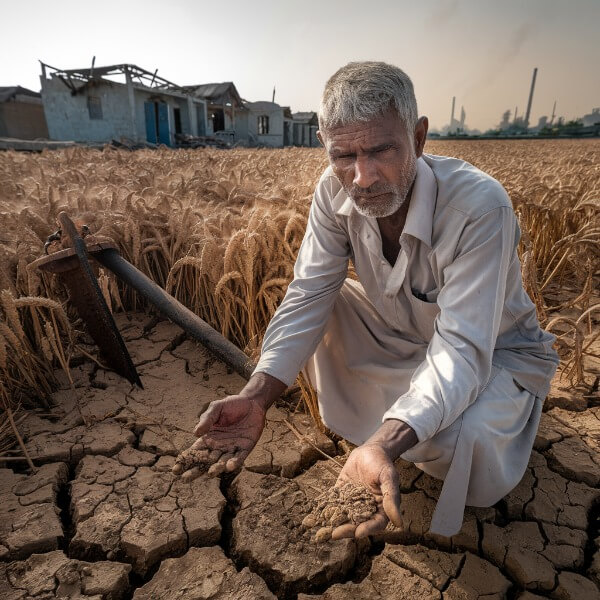
Jacobabad, Pakistan — The thermometer reads 52°C (126°F) when the first child collapses. By noon, the hospital’s concrete floors are packed with heatstroke victims—farmers, laborers, children—their bodies limp as rag dolls. Outside, the streets are deserted. The air smells of burning tires and despair.
This isn’t a scene from a dystopian novel. This is daily life in what climate scientists now call “the hottest city on Earth,” where temperatures regularly exceed what the human body can endure.
The Great Climate Paradox
Pakistan contributes less than 1% of global greenhouse gas emissions. Yet it suffers disproportionately from climate disasters that threaten to unravel its ancient civilization:
- The 2023 Superfloods submerged one-third of the country, displacing 33 million people—more than the populations of Ukraine and Gaza combined. Many remain homeless today, living in tent cities that bake under the relentless sun.
- The Heat Death Zone: Jacobabad now endures 120 days per year above 50°C (122°F), rendering outdoor work potentially lethal. Construction workers tie wet cloths around their heads, but many still collapse before noon.
- Agricultural Collapse: The Indus Valley, which sustained human civilization for 5,000 years, is failing. Wheat production has dropped 60% in five years, while the once-fertile delta is now poisoned by saltwater intrusion.
“My grandfather taught me to read the land,” says 70-year-old Gulzar Ahmed, crumbling dry soil between his fingers. “Now the earth itself is turning to dust. The monsoons come too late or not at all, and when they do come, they drown everything.”
The Invisible Refugees
In Karachi’s Orangi Town slum, a new underclass emerges—climate widows.
Shazia Bibi, 28, lost her fisherman husband when rising seas swallowed their coastal village near Thatta. Now she stitches footballs in an airless sweatshop for $1.20 per day while raising two children in a tin shack that floods annually. Her daughter Ayesha, 5, suffers from chronic malnutrition, her arms as thin as the reeds that once grew along the Indus.
“The sea took my husband, the heat took my father’s farm,” Shazia says, her calloused hands never pausing their work. “I tell my children stories about how we used to eat fish from the river. They don’t believe me.”
Why the World Looks Away
Three factors explain the global silence on Pakistan’s climate catastrophe:
- No Simple Narrative: Unlike Ukraine or Gaza, there are no clear villains—just systemic failures spanning centuries of colonialism, poor governance, and global indifference.
- Disaster Fatigue: After brief coverage of the 2022 floods, international media moved on, though millions remain displaced.
- The Unspoken Fear: If Pakistan’s agricultural and social systems collapse, experts warn 20 million climate refugees could trigger regional instability.
The Underground Resistance
In a converted school bus in Karachi’s industrial district, Dr. Yasmin Rahman runs Pakistan’s first dedicated heatstroke clinic.
With no government funding, she improvises: using old newspapers as cooling pads, training grandmothers as emergency responders, and bribing ice vendors to prioritize hospitals. Her team has saved over 600 lives last summer alone, though she estimates they lose three patients for every one they save.
“They call us the Third World,” Dr. Rahman says, wiping sweat from a rickshaw driver’s forehead. “But we’re the canaries in your coal mine. What happens to us today will reach your doorstep tomorrow.”
How to Help Before It’s Too Late
The window to prevent total collapse is closing, but meaningful action can still make a difference:
- Support Local Heroes: Organizations like the Edhi Foundation operate heat relief centers across Sindh province, providing life-saving shade and water.
- Demand Climate Justice: The “loss and damage” fund established at COP28 remains largely unfunded by wealthy nations. Pressure policymakers to honor these commitments.
- Break the Silence: Share stories like this one to counter the media blackout. Algorithms favor conflict over slow-moving disasters—human attention must balance the scales.
The Tragic Irony: While Western nations invest billions in green technology, the carbon offset programs funding these initiatives often rely on accounting tricks that ignore frontline suffering. The very systems meant to combat climate change may be perpetuating climate injustice.
About the Author
Ingi Thor Arngrimsson is a fearless truth-seeker who exposes what others try to sweep under the rug. As the driving force behind No Filter News, he brings hidden truths to light, tackling the stories mainstream media won’t touch. From taboo topics to global cover-ups, Ingi delivers the raw, unfiltered reality the world deserves to know. If there’s a truth buried deep, he’s the one digging it up.

 nofilter.news
Leave a reply to Rajwantee Robinson Cancel reply