
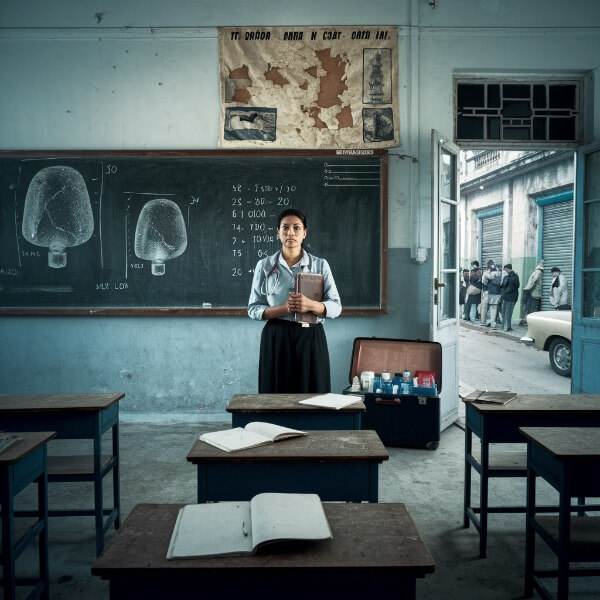
HAVANA, Cuba – Dr. Elena Martínez spent 15 years saving lives in Havana’s overcrowded hospitals. But last month, she packed a single suitcase, hugged her parents goodbye, and boarded a rickety boat to Mexico. Her destination? Miami. Her reason? “In Cuba, I earned $30 a month. I couldn’t even buy aspirin for my patients.”
She’s not alone. Cuba is hemorrhaging its doctors, teachers, and engineers in the largest brain drain since the 1990s. Over 500,000 Cubans—roughly 5% of the population—have fled in the past two years, according to U.S. border data. The exodus is so severe that rural hospitals are closing, schools operate without teachers, and engineers abandon critical infrastructure projects mid-construction.
A Collapse Decades in the Making
Cuba’s economic crisis—fueled by U.S. sanctions, pandemic tourism losses, and government mismanagement—has reached a breaking point:
- Doctors Earning Less Than Taxi Drivers: A surgeon’s monthly salary: 40$ While a taxi driver in Havana earns 50$ per day.
- Blackouts & Food Lines: Power outages last up to 12 hours daily. The average Cuban spends 40 hours a month queuing for basics like eggs and flour.
- The “Dual Economy” Trap: Those with foreign relatives survive on remittances. The rest barter clothes for food.
“We’re not fleeing capitalism. We’re fleeing collapse,”
says Luis Ortega, a former math professor now washing dishes in Tijuana.
The U.S. Migration Paradox
While U.S. politicians call Cuba a “failed state,” America’s policies accelerate its unraveling:
- The Cuban Adjustment Act (1966) still grants Cubans fast-track residency—a powerful pull factor.
- Title 42 Expulsions Don’t Apply: Unlike Venezuelans or Haitians, Cubans are rarely deported. Over 150,000 crossed the U.S.-Mexico border in 2023 alone.
- Florida’s Labor Boom: Cuban doctors drive Ubers. Engineers work construction. Teachers clean hotels.
“We trade stethoscopes for Uber apps, but at least I can feed my daughter now.”
says Dr. Martínez.
Cuba’s Institutional Rot
The fallout is catastrophic for those left behind:
- Hospitals Without Healers: 10,000+ doctors have left since 2021. In Holguín province, 3 hospitals closed due to staff shortages.
- A Generation Without Schools: 30% of teachers quit. In rural areas, kids attend class just twice a week.
- Infrastructure in Freefall: Blackouts worsen as power grid engineers flee.
“It’s a ghost country,”
says Havana sociologist Carlos Almeida.
“The educated leave. The old and poor stay to starve.”
Why the Silence?
- Venezuela Steals the Spotlight: U.S. media obsesses over Venezuelan migrants (7 million+), not Cubans.
- Cold War Fatigue: Cuba’s struggles feel “old news” compared to Ukraine or Gaza.
- Political Games: Florida Republicans want regime change; Democrats avoid angering Cuban-American voters.
The Breaking Point
Cuba now faces an existential question: Can a nation survive when its future vanishes overnight?
For Dr. Martínez, the answer is already clear.
“My hospital had no gloves, no antibiotics. How could I stay?”
She wipes away tears in a Miami clinic, where she now earns $8,000 a month as a medical assistant—200x her Cuban salary.
“I saved lives there. Here, I file paperwork. But here, I live.”
The Unspoken Crisis
The world watches Ukraine and Gaza. Meanwhile, Cuba—a country just 90 miles from Florida—is losing its soul, one doctor, one teacher, one engineer at a time.
Demand Policy Change.
Share This Story.
 nofilter.news
Leave a comment